How I Discovered I'm Aphantasic

It's been many years since I discovered that I have aphantasia, but I do remember the first time I had a hint that other people see things differently. Long before I trained to be a Hypnotherapist, I went to visit a local practitioner because I had a problem and I needed a quick fix.
She invited me into her treatment room and instructed me to lay down on her couch whilst she lit some incense and hit the play button on her CD player. Gentle ocean sounds begin filling the room.
The therapist told me to close my eyes and relax. She told me she was going to take me on a journey to a beautiful beach. She then tells me to picture the beach in my mind's eye.
"What on earth is she on about?" I asked myself. "I can't see anything except the back of my eyelids. No beach, no ocean, no birds or palm trees. Nothing".
I thought, maybe I'm doing it wrong. So I tried really hard to see something, but nothing happened. So I decided to just relax for the next hour and ignore her commentary - too embarrassed to say anything. How very British!
This was the first time I recall my Aphantasia actually causing an issue. To be honest I wasn't really aware it was a problem, I didn't even know that Aphantasia was a thing.
I thought everyone was the same as me. It genuinely hadn't occurred to me that other people were actually seeing something when a therapist said "picture a beach." For me it was just words pointing at nothing.
That experience — lying on a couch trying to visualise an imaginary beach while a therapist waited — is exactly what I want to save other people from. Not because visualisation-based hypnotherapy is bad, but because it's the wrong tool for someone whose mind doesn't work that way. And there are more of us than people realise.
Becoming a Hypnotherapist
Fast forward to 2018. I'd quit my corporate gig at the end of 2017 and was looking for a new career. A friend of mine invited me to a seminar about becoming a Hypnotherapist. I took some convincing after that experience on the couch all those years ago. He assured me that the modality they were offering didn't involve scripts or visualisation and would 100% work for my future clients.
I learnt the CONTROL system, which was incredibly good but I felt the need to look for an even more effective style of Hypnotherapy. Something more flexible.
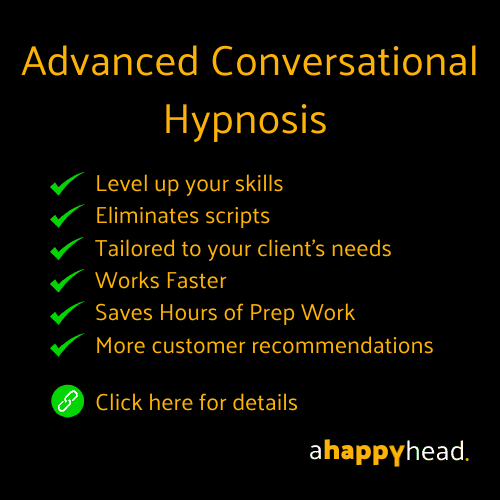
Some time later I discovered Advanced Conversational Hypnotherapy. Another modality that doesn't require clients to imagine/see/picture or visualise anything. Conversational Hypnotherapy doesn't even need you to go into "trance", so it's you that's in control.
There is one very important point to note here if you're looking for a hypnotherapist, and have trouble visualising. Finding the right kind of Hypnotherapy is great, but the advantage disintegrates if the therapist uses visual language in the conversation. Phrases like "I see what you mean" or "It looks like what you're saying is..." will disrupt the conversation we're having with your unconscious mind. So pick someone like me who will only go down that road if you lead me there.
Aphantasia to Hyperphantasia
According to Wikipedia Aphantasia is: "the inability to visualise." Aphantasia was identified way back in the 1880's by Francis Galton.
For people like me, it means we don't see ANYTHING when asked to imagine something in our minds eye. At the other end of the scale there's a thing called Hyperphantasia - which as I'm sure you can guess, means people can see an image or video as if they were seeing it in real life.
Of course there's a whole bunch of people who are somewhere between those two extremes.
At present there's no "cure" for aphantasia because it's not life threatening or dangerous, so there's not that much interest from the science and medical community to "fix" it.
So why am I even talking about this?
Why Aphantasia is Important
The first reason is for those who can't visualise or have a really hard time seeing things in their mind's eye, but really want to use hypnotherapy to deal with a life or business problem: I can help you. I will never frustrate you by asking you to try and see something in your mind's eye.
If you need help and would like to have a chat with me, you can book a consultation. I work on Zoom and have clients all over the world.
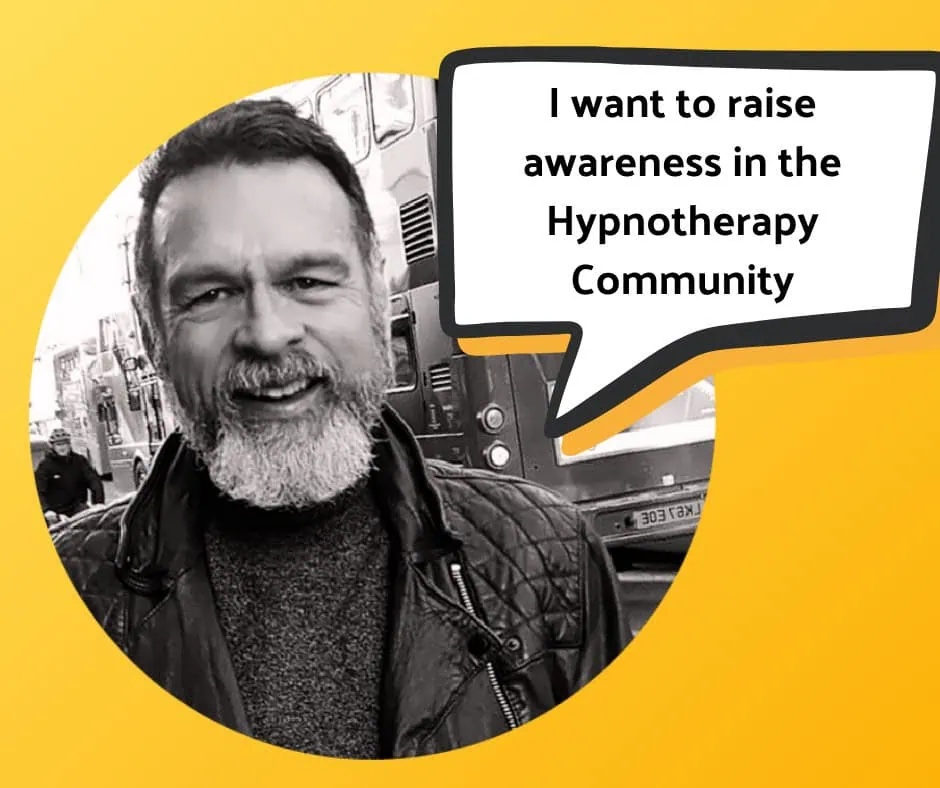
The second reason is I want to raise awareness of Aphantasia from within the therapy community - to help hypnotherapists get better results. I have a community of hundreds of Hypnotherapists on Facebook and I took a poll recently to see how many of them were aphantasic. It turned out that a surprising number of them were Hyperphantasic, and that convinced me that it's something we urgently need to be talking about.
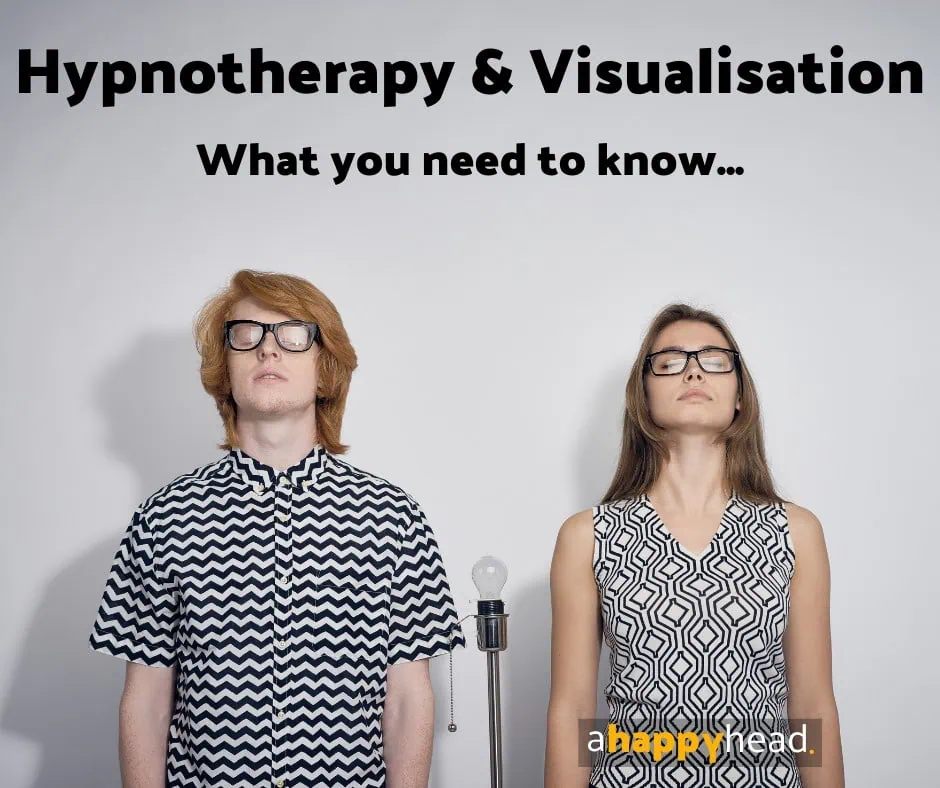
If you have aphantasia and you've wondered whether hypnotherapy could help you
The short answer is yes — with the right approach and a therapist who actually understands what aphantasia means in practice.
The longer answer, including exactly how the process works and what it can address, is on the hypnotherapy for aphantasia page.
If you're ready to have a conversation about whether this is right for you, book a free 15-minute Decision Reset Call below. Let me know you have aphantasia when you book and the session will be set up accordingly from the start.